
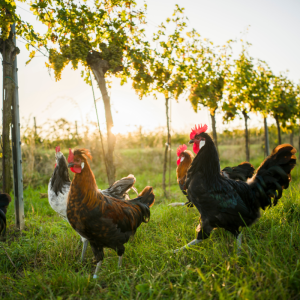
Austria’s distinctive geography is the foundation for exceptionally high-quality wines.
Did you know that Austria lies at the same latitude as Burgundy? Its more central position in Europe places it at a transition point between the mild, damp Atlantic climate and the continental Pannonian climate, which brings much greater temperature variation. Warm, sunny summer and autumn days, cool nights, and northerly winds help shape aromatic wines with freshness, body, and finesse.
Austria is a relaxed country with an exceptional quality of life, which helps make it a globally renowned tourist destination.
Many people I have met describe Austria as one of Europe’s most welcoming countries, particularly in its picturesque wine-growing regions, which cover around 44,210 hectares. These include the Wachau and the classic regions of Niederösterreich on either side of the Danube, Steiermark and its spectacular hills, Burgenland and Lake Neusiedl, a natural paradise, and Vienna, the only world capital with significant viticulture. Austrian wine’s character is as distinctive as the regions where it is produced. Alongside climate, the diversity of Austria’s soils is central to this individuality: Niederösterreich has crystalline stone terraces and thick layers of loess. Northern Burgenland and Südsteiermark have calcareous soils, and the Kamptal and Vulkanland Steiermark have volcanic soils. Despite its small size as a wine-growing nation, it produces a broad range of compelling wines, all marked with balance, ripeness and freshness.
Internationally successful varieties—including Riesling, Sauvignon Blanc, Gelber Muskateller, Pinot Blanc, Chardonnay, Pinot Noir, Merlot and Cabernet—grow in Austria’s distinctive regions and vineyards.
In recent years, the potential of Austria’s historic grape varieties has become increasingly clear, with Grüner Veltliner leading the way. Long recognized as one of the world’s great white wines, it is now being planted more frequently in other parts of the world. International wine experts are also discovering varieties such as Zierfandler (Rotburger), Rotgipfler, Roter Veltliner (one of my favorites), Neuburger. and Wiener Gemischter Satz, alongside Austria’s characteristic red wines made from Zweigelt, Blaufränkisch, and Sankt Laurent.
Austrians deeply respect nature and work to protect it. Environmental protection, water purity, healthy GMO-free food, biodiversity, and the efficient use of energy and materials are all national priorities.
It is therefore no surprise that Austria is the world leader in organic agriculture: around 28% of its agricultural land and 25% of its vineyards are managed according to organic guidelines, while around 12 % of the organic area is farmed biodynamically. In addition, 28% of all vineyards are farmed under the “Sustainable Austria” certification. The majority of grapes are still harvested by hand.
I hope you’ve enjoyed reading this quick guide to Austrian wine. Stop by the shop to learn more about Austrian wines. This promotion will run from mid September to early October.
Source and picture: austrianwine.com