WELCOME!

Hi there! Thank you for visiting wine-sense online. We hope to be as interactive, passionate, and knowledgeable on this website as we are in person.

Our approach is simple. We keep the seasons in mind and pair to the foods we’re cooking with at each time of year. OK, so we might be over-thinking a bit. But that’s why you love us!

If you’ve shopped in the store, you know our wines move fast and the selection changes often. So be sure to check back frequently for latest finds, our new obsessions, and recently allocated bottles. We’ll also share upcoming events and sales so, you can grab them while they’re in stock.  – Samanta

Welcome to Wine-Sense

WS•Essentials

A Guide to Austrian Wines

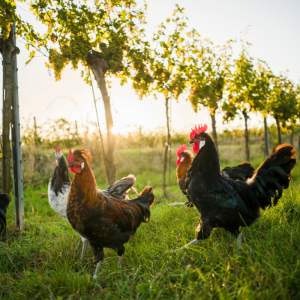
Cockerels in a vineyard © Austrian Wine / www.pov.at

Austria’s distinctive geography is the foundation for exceptionally high-quality wines.

Did you know that Austria lies at the same latitude as Burgundy? Its more central position in Europe places it at a transition point between the mild, damp Atlantic climate and the continental Pannonian climate, which brings much greater temperature variation. Warm, sunny summer and autumn days, cool nights, and northerly winds help shape aromatic wines with freshness, body, and finesse.

Austria is a relaxed country with an exceptional quality of life, which helps make it a globally renowned tourist destination.

Many people I have met describe Austria as one of Europe’s most welcoming countries, particularly in its picturesque wine-growing regions, which cover around 44,210 hectares. These include the Wachau and the classic regions of Niederösterreich on either side of the Danube, Steiermark and its spectacular hills, Burgenland and Lake Neusiedl, a natural paradise, and Vienna, the only world capital with significant viticulture. Austrian wine’s character is as distinctive as the regions where it is produced. Alongside climate, the diversity of Austria’s soils is central to this individuality: Niederösterreich has crystalline stone terraces and thick layers of loess. Northern Burgenland and Südsteiermark have calcareous soils, and the Kamptal and Vulkanland Steiermark have volcanic soils. Despite its small size as a wine-growing nation, it produces a broad range of compelling wines, all marked with balance, ripeness and freshness.

Internationally successful varieties—including Riesling, Sauvignon Blanc, Gelber Muskateller, Pinot Blanc, Chardonnay, Pinot Noir, Merlot and Cabernet—grow in Austria’s distinctive regions and vineyards.

In recent years, the potential of Austria’s historic grape varieties has become increasingly clear, with Grüner Veltliner leading the way. Long recognized as one of the world’s great white wines, it is now being planted more frequently in other parts of the world. International wine experts are also discovering varieties such as Zierfandler (Rotburger), Rotgipfler, Roter Veltliner (one of my favorites), Neuburger. and Wiener Gemischter Satz, alongside Austria’s characteristic red wines made from Zweigelt, Blaufränkisch, and Sankt Laurent.

Austrians deeply respect nature and work to protect it. Environmental protection, water purity, healthy GMO-free food, biodiversity, and the efficient use of energy and materials are all national priorities.

It is therefore no surprise that Austria is the world leader in organic agriculture: around 28% of its agricultural land and 25% of its vineyards are managed according to organic guidelines, while around 12 % of the organic area is farmed biodynamically. In addition, 28% of all vineyards are farmed under the “Sustainable Austria” certification. The majority of grapes are still harvested by hand.

I hope you’ve enjoyed reading this quick guide to Austrian wine. Stop by the shop to learn more about Austrian wines. This promotion will run from mid September to early October.

Wine and Stuff

In-depth Austrian Wines | Arik Colbath

Thursday, October 1 2026
From 5 to 7

Have you heard of the grape Blaufränkisch? This indigenous red varietal is primarily grown in the wine regions of Burgenland and eastern Niederösterreich, and is documented in Austria back to the 18th century. It later appeared in Germany as Lemberger (or more commonly Limberger) and in Hungary as Kékfrankos. At this tasting, we’ll be studying and enjoying Blaufränkischand also delving into other regions and grapes, as we learn more about wines from Austria at our tasting with Arik Colbath on October 1st, from 5 to 7.

Club Red promo

SEPTEMBER Club•WS | red

The Club is available for pickup as of Thursday, September 3rd.

TEMPRANILLO

Located in the municipality of Alhambra, in the province of Ciudad Real, and has invested heavily in the land of wine par excellence: the Autonomous Community of Castilla-La Mancha, where half of Spain’s vineyards are concentrated… to learn more, join our club!
Food Pairings: Stuffed Peppers (see included recipe)

CARIGNAN

“My parents were winegrowers in Sancerre, so for as long as I can remember, I’ve been in direct contact with the world of wine. My brothers have also taken up the family baton. My passion for wine – a product linked to our culture and the French ‘art de vivre’ –.… to learn more, join our club!
Pairings: Grilled Salmon

PORTUGUESE RED BLEND

Tempranillo, Syrah, and Castelão from Alentejo. Parras Vinhos, founded by Luís Vieira in 2010 and based in Alcobaça, is a wine company with roots in generations of wine producers in Vieira’s family. Initially focused on the international market... to learn more, join our club!
Food Pairings: Pork

RED BLEND

The oldest references to Quinta do Gradil date to the end of the 15th century, in a royal document by King John II of Portugal, dated February 14, 1492. In the 16th century, Quinta do Gradil was a royal hunting lodge, where a vast fauna and flora abounded. Deer, partridges, hares, rabbits, and foxes were easily found there… to learn more, join our club!
Food Pairings: Grilled Sausage

WS Baskets 2023

GIFT BASKETS – THREE WAYS

We have three baskets to offer with some goodies inside. Elegantly wrapped and ready to gift.
• Bottle of red or white wine
• Notebook – wine-sense journal
• Stemless glasses – two
• Extra virgin olive oil

Basket combinations will vary according to price level:
• $65
• $85
• $120